Is a premium rice cooker worth it over a basic one?
A basic one-switch cooker boils the water until it is absorbed, then a thermostat trips it to keep-warm; for long-grain white rice a few times a week, that works. The higher tiers buy control. A micom, or fuzzy-logic, cooker adjusts the heat through soaking, cooking and resting, which matters most for brown rice and mixed grains. Induction heats the whole pot evenly and adjusts faster. Pressure cooks above boiling point for stickier short-grain rice. If rice is a daily staple, the upgrade is real; if it is an occasional side, it is not.
What does the cup number on a rice cooker mean?
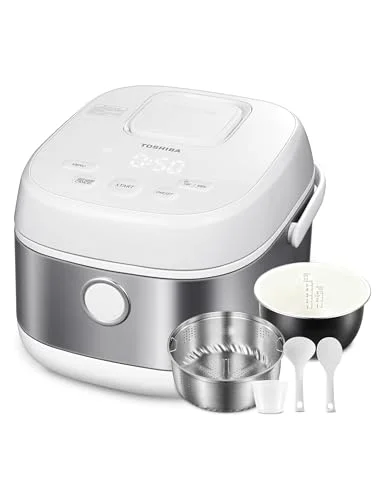
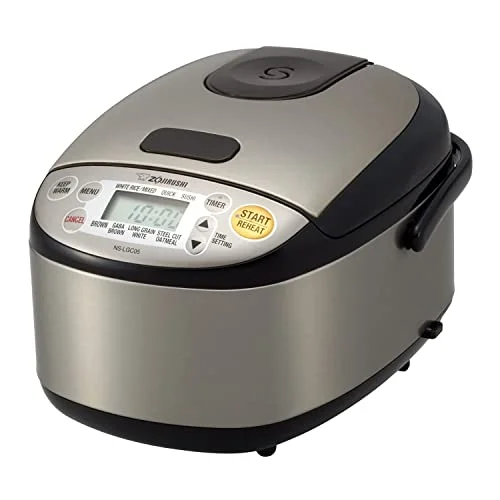
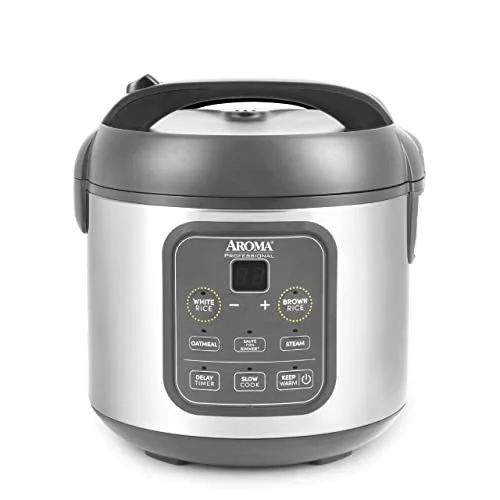
Two different things depending on the brand, and neither is a US measuring cup. Some listings count raw rice: Zojirushi’s and Toshiba’s 5.5-cup models take five and a half cups uncooked. Others count cooked rice: Aroma, Elite Gourmet and Black+Decker sell 6-cup models that take three cups raw. Rice roughly doubles as it cooks, so the second kind is about half the size of the first. The cup is smaller, too: Zojirushi measures in a 180 mL rice cup, roughly three-quarters of a US cup. Use the cup in the box and the water lines in the pot.
What size rice cooker do I need?
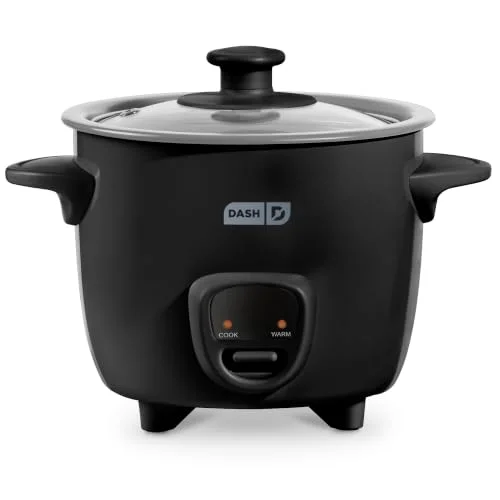
Count in raw cups and size for an ordinary week, not a party. For one person, a 1-cup mini such as the Dash is enough. For two, a 3-cup model, which Aroma and Zojirushi both pitch at couples and small families. For a family of three to five, 5.5 cups raw is the standard size. Big households and batch cooks should look at 8 to 10 cups. Bigger is not free: a large pot is not designed around tiny batches, which is why Zojirushi points out that its 3-cup model cooks as little as half a cup.
What is fuzzy logic, or micom, in a rice cooker?
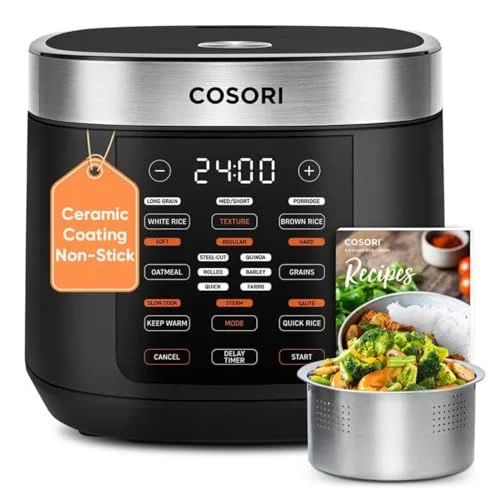
Micom is short for microcomputer, and fuzzy logic is the control software running on it. Instead of a thermostat that simply flips from cook to warm when the water is gone, a micom cooker reads temperature sensors and adjusts the heat through the whole cycle: a gentle soak, a controlled boil, a steaming rest. COSORI describes a seven-step process; Zojirushi says its Neuro Fuzzy models customize temperature and heating time automatically. Fuzzy logic describes the control, not the heat source: most micom cookers still heat from a plate under the pot, and induction is a separate upgrade.
Is induction heating worth paying for?
For people who cook rice every day, often yes. In an induction, or IH, cooker, coils around the pot create a magnetic field that makes the metal of the inner pot heat itself, so the heat comes from the pot walls rather than from a single plate below. That means more even cooking across a full pot and faster, finer temperature changes — Zojirushi’s IH listing talks about high heat and fine heat adjustments. The benefit shows most with full batches, short-grain rice and brown rice. For an occasional pot of long-grain rice, a good micom cooker is enough.
What does a pressure rice cooker do differently?
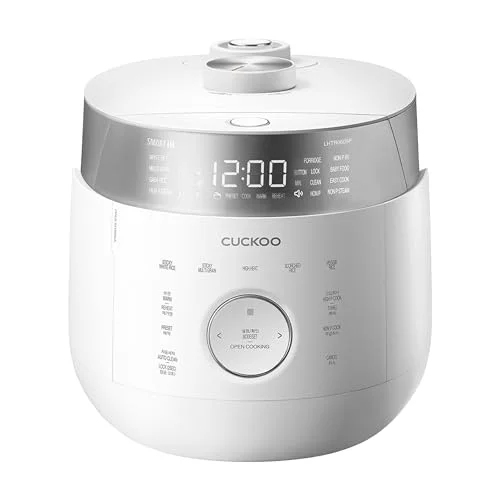
It seals the pot and cooks above the normal boiling point. Water boils at 212°F at sea level; under pressure it boils hotter, so the grains absorb water more completely — Zojirushi says pressurized cooking promotes gelatinization and produces sticky, plump rice. That suits short-grain Japanese and Korean rice, brown rice and mixed grains. If you like separate, fluffy long-grain rice, high pressure works against you, which is why CUCKOO’s twin-pressure models let you switch it off. These cookers sit at the top of the price range and have a locking lid with a gasket and valve to keep clean.
How long can rice stay on keep-warm?
Safely, for as long as the cooker keeps it hot; for quality, less long than the timer allows. USDA guidance is to hold hot food at 140°F or above and to refrigerate leftovers within two hours, and keep-warm exists to hold rice hot. Listings promise long windows — COSORI quotes 24 hours, COMFEE’s 4-cup model 12 — but rice dries out, yellows and picks up a stale smell over many hours. If you will not eat it within a few hours, cool it and refrigerate it instead. This is general information, not food-safety advice for your situation.